 Posted by Neil Garrett, Sales Director of Claims UK at Legal Futures Associate Verisk
In March 2026, a £15.5 million lump-sum personal injury settlement was reached through UK legal proceedings Settlements of this scale are rare, typically reserved for catastrophic life-altering injuries, and involve complex calculations based upon future loss and medical needs. Yet personal injury valuations are often treated as fixed once calculated, despite the many economic variables they are based upon. The currents of economic conditions can quickly change, with calculations at risk of being outdated and awash in changing market currents.
In the case of general damages, awards are primarily directed by the Judicial College Guidelines. The 18th edition, published in April, increased guideline valuation brackets by 8.26% to reflect retail price index movements with loss value calculations anticipated to increase in parallel.
By contrast, special damages and future loss claims depend on a far broader range of economic inputs, exposing legal representatives to a greater risk of inaccuracy if valuations are not calculated based on current economic principles.
The ripple effect on future losses
As future losses are typically awarded as a single lump-sum payment, it is essential that valuations reflect the current economic conditions at the point of settlement. Where calculations are based on outdated assumptions, legal representatives risk advising on figures that may over or under-compensate claimants, exposing clients to miscalculations or financial shortfall.
In assessing special damages, courts are required to discount anticipated losses to present value by assessing long-term economic conditions, including the Personal Injury Discount Rate, investment returns, inflation rates, and earnings growth. As these valuations depend on multiple interrelated economic principles, even a minor change in one variable can have a disproportionate impact on the overall assessment.
A topical example is provided by the Bank of England base rate, currently set at 3.75% and scheduled for review on 30 April The rate is adjusted in response to wider economic conditions, including inflation and global market developments, and informs the investment return assumptions considered during reviews of the Personal Injury Discount Rate. As the PIDR is applied by courts when discounting future loss to present value, movements in interest-rate conditions are considered by the Lord Chancellor at the point of review and may lead to upward or downward adjustments in valuation.
For personal injury practitioners, it is crucial that calculations remain responsive to economic change. In practice, the manual updating and maintenance of multiple economic variables is both complex and time-consuming, increasing the risk of error. As economic conditions continue to evolve, the ability to recalculate variables efficiently and with confidence has become a core component of effective legal practice.
Confidence in automated accuracy
Ensuring governmental and actuarial data is up to date requires consistent upkeep and resource allocation. Verisk’s piCalculator tool eliminates the need for manual calculations, effortlessly automating complex damage awards and providing accurate loss values for both claimant and defendant legal representatives.
piCalculator shortens settlement negotiations by enabling lawyers to recalculate an entire book of claims in minutes when critical data changes, ensuring assessments remain accurate and compliant with the latest legal and governmental requirements.
Receive alerts when major changes occur that affect damage calculations, reducing the risk of errors and efficiently ensuring schedules of loss remain court-ready:
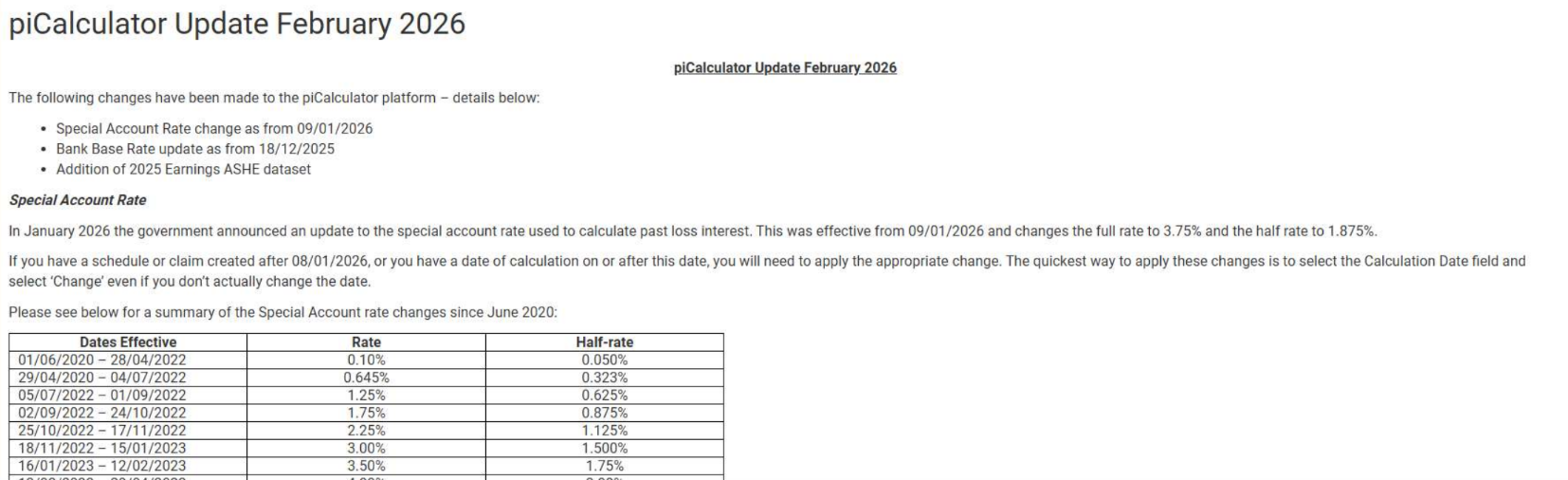
Verisk piCalculator recent update – receive clear notification updates when changes are made.
More than 3500 users trust piCalculator to handle personal injury calculations. For more information, please contact Neil Garrett at claimsuk@verisk.com.
[KK1]Reference: Chris Barnes KC and Tony Goff secure £15.5 million lump sum…
[KK2]Reference: The 18th edition of the Judicial College Guidelines | Weightmans
[KK3]Reference: Interest rates and Bank Rate: our latest decision | Bank of England