 In the second episode of Series 4 of the Build Better Habits [1] webinars, Amy Bruce, marketing director at Osprey Approach [2], hosted a panel of experts to explore how SME law firms can level up their business development (BD) strategies.
Our expert panellists were Robert Flint, founder of Adviserly and author of Working with Strangers; Lara Squires, founder and commercial director at Consortium More Than Marketing; Sam Holden, Head of Customer Success at Katchr; and Shaun Cremins, Client Experience Specialist at Insight6.
Together, they unpacked what growth really means for law firms today, the biggest barriers to effective BD, and the habits that distinguish high-performing firms and individuals.
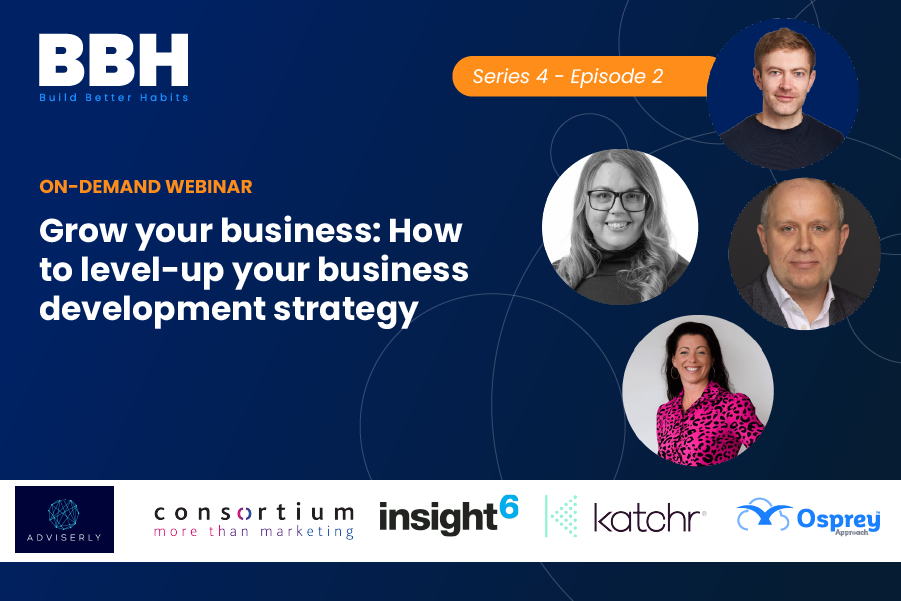
This episode covered:
- What growth should mean for modern law firms
- Common barriers to successful business development
- How to build a referral-first strategy
- The role of data, tech, and culture in BD success
- How to measure growth beyond financial metrics
- Practical habits to implement today
Redefining growth in the legal sector
The panel challenged the traditional view that growth means more clients, more lawyers, and more offices. Instead, they advocated for sustainable, lifestyle-driven growth that prioritises profitability, wellbeing, and strategic focus.
Robert shared that many firms in his network are more interested in thriving than expanding: “Growth isn’t always about scale. For many firms, it’s about building a healthier practice – one that’s profitable, enjoyable, and sustainable.”
Sam added that growth should also mean operational efficiency and client value at scale, not just headcount or billable hours. Lara emphasised the need to pause and reflect: “Firms say they’re too busy to think about growth. But are they busy doing the right things? Are they working with the right clients?”
Shaun reminded us that growth starts with people: “Before we talk about clients, we need to talk about the team. Their insights, wellbeing, and alignment with the firm’s goals are what drive meaningful growth.”
Biggest barriers to business development
During the live webinar, attendees were asked to share their top challenges:
- Lack of time
- Limited BD skills or training
- Resistance to change
- Not seeing BD as a priority
The panel agreed that these barriers are often symptoms of deeper cultural and operational issues. Sam pointed to entrenched models and reluctance to adopt tech. Lara highlighted the lack of tracking and data and explained that “Many firms say their work comes from referrals, but they don’t actually track it. Without data, you’re guessing.”
Robert stressed that referrals are the lowest-hanging fruit for growth, yet most firms do little to actively generate them. Shaun added that internal referrals and cross-selling are often overlooked, despite being powerful growth levers.
Habits of high-performing law firms and legal professionals
The panel shared the behaviours that set successful firms apart:
- Referral-first mindset
Robert explained that rainmakers build strong relationships with referral partners – not just clients. “Each referral partner could mean five new clients a year. Focus your marketing on them, not just prospects.”
- Curiosity and client-centricity
Sam emphasised the importance of staying curious and relentlessly focused on client outcomes. “High performers ask: how can we deliver this faster, clearer, and better for the client?”
- Consistency and measurement
Successful firms treat BD as a habit, not a one-off project. “What gets measured gets managed,” said Sam. “Track what matters and build consistency.”
- Empowering individuals
Lara encouraged firms to identify their “A-team” – the lawyers most open to BD – and invest in them. “Start small. Cultural change takes time, but success breeds momentum.”
- Open mindset and internal alignment
Shaun highlighted that high performers are self-aware and open to feedback. “They know what they’re not good at and seek support. They prioritise their team’s wellbeing and align culture with strategy.”
How to measure growth beyond financials
While revenue and profit are important, the panel urged firms to track leading indicators of success:
- Client retention and referral rates
- Employee engagement and turnover
- Operational efficiency and error reduction
- Conversion rates and inquiry follow-up
- Marketing metrics (e.g. LinkedIn engagement, impressions)
- Client feedback throughout the journey, not just at the end
Robert added a personal metric: “If you can go on holiday and not stress about work, that’s a sign your business is healthy.”
One habit to implement today
To wrap up, each panellist shared one practical habit or mindset shift:
- Robert: Take a happy client to dinner and ask them to invite others like them.
- Sam: Focus on value delivered, not time served.
- Lara: Create a top 10 list of potential referrers and build a plan to engage them.
- Shaun: “Mine for gold” – ask your team and clients the right questions to uncover growth opportunities.
Build Better Habits for long-term success
This episode explored how prioritising continuous improvement can transform your BD strategy. Whether it’s empowering your team, refining your referral process, or measuring what matters, the key is to build habits that drive sustainable growth.
Watch the full episode on-demand now [3] to hear the panel’s insights, stories, and practical advice in full.
Explore all four habits in our Build Better Habits [1] webinar series, available on-demand now.