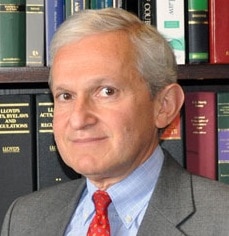
Vos: Lawyers will have a different role in future
There needs to be “a complete re-think of how we prepare our young lawyers for practice in the machine age”, the Master of the Rolls said yesterday.
Sir Geoffrey Vos predicted that the greatest impact of technology would be in what “individuals and businesses expect from the law and the justice system”.
He explained: “They will no longer value lawyers in the same way because they will have their own access to the previously forbidden land of laws and legal precedents.
“All that will be available, much of it free of charge, by the use of AI-driven tools. Instead, they will value the guidance and insight that trained lawyers can give to explain what the machines have advised and, perhaps also, determined.”
Addressing the Association of Law Teachers’ annual conference, held at Exeter University Law School, he expressed certainty that lawyers would still be needed in the machine age.
“One of the many hidden trends in our rapidly changing society is the accelerating complexity of all our lives. Even the Tik-Tok generation do not find that complexity easy to navigate and understand.
“Lawyers will still comprise a section of society with a better grasp of the rules and the ways in which those rules operate to affect everyone’s daily lives.
“The ability to understand, martial and explain complexity in a world of ever more capable machines will be crucial to the survival of the legal community.”
Over the next 15-20 years, Sir Geoffrey said, routine judicial decision-making would be “informed or directed” by machines.
“Those programmes will be, if they are not already, as reliable as human judges. They will, in the first instance, be used only with the agreement of the parties, but that acceptance will rapidly become routine, as the parties to disputes realise that it is far quicker and far cheaper to allow a machine to decide run-of-the-mill legal questions.”
He cited a report earlier this month from a group of French-speaking academics from Le Club des Juristes, which includes the recommendation that AI had a role in compensation litigation, such as personal injury claims.
But this did not signify the end of lawyers or judges. “Humans will remain crucial to the development of legal principles as human culture and human society change. Machines will probably not be able to develop the law for the benefit of humanity in the way that human judges can do.”
Humans would also remain “instrumental” in guiding and assisting other humans towards understanding and accepting machine-made decision-making.
Sir Geoffrey said the use of AI tools – already enhancing the quality of written and oral submissions by litigants in person – meant that, instead of going to a lawyer for legal advice, clients now “come to seek a lawyer’s confirmation of the correctness of what AI has told them is the legal position”.
They expected to pay less for this, which “is already leading to reduced law firm recruitment”.
“And, where the law firms are recruiting, they are looking for different skill sets. Of course, they are looking for tech-savvy young lawyers, paralegals and tech-savvy non-lawyers. But that is not all: they need a very particular kind of client-facing lawyers to lead and guide both tech-savvy and tech-sceptic clients through the minefield of AI-driven justice.”
As a result, lawyers of the future would need to “adapt their business models considerably” to take account of three factors: “(a) the fact that their clients get pre-existing answers from AI, (b) they can and must use AI themselves to make the delivery of reliable legal advice quicker and cheaper, and (c) the changed working practices and justice expectations of those to whom legal advice is delivered”.
Sir Geoffrey said a major challenge for law teachers was how to develop the legal analysis and strategy that would remain core to being a lawyer while AI did a lot of the underlying legal research and groundwork.
“But I am sure we will find ways around that problem. Legal training will need to be different, but law students will still need to understand the basic parameters of contract, tort, criminal, family law, company law, administrative and property law.
“I think these basic subjects will remain important to the ability of human lawyers to explain the output from well-trained machines.”
Lawyers would also still be needed to interact with, and make submissions to, human judges, “since I cannot envisage a time in which human judges will not retain the right to undertake the final resolution of the most difficult and consequential legal decision-making”.