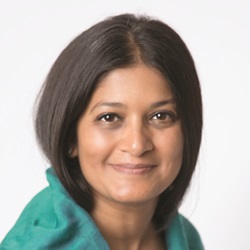
Shah: Appointment scrutiny hearing later this month
The failure of law firms to give a final response to complaints about service is one of the big challenges for the Legal Ombudsman (LeO), according to the government’s choice for next chair of its governing body.
Meanwhile, the government has announced the current chair of the body that appoints KCs as its candidate to take over as chair of the Legal Services Board (LSB).
Richard Blakeway, the current housing ombudsman, was named last month as the new chair of the Office for Legal Complaints, which oversees LeO, subject to the scrutiny of the justice select committee.
He told MPs yesterday that LeO, which had performed “better than it is given credit for”, must not become “a surrogate for effective local complaints handling”.
Asked what would be the biggest challenge he faced in the role, Mr Blakeway said one of the things that “really struck” him during the appointment process was that, in 28% of the cases received by LeO, complainants had not received a final response from their legal service provider.
“That is not an experience I would have in social housing. For all the challenges in social housing, that doesn’t happen.”
Mr Blakeway estimated that in less than 1% of the cases that he saw as housing ombudsman, there had not been a final response to a complaint from the housing provider.
That suggested there were “some cultural and behavioural issues out there” in the legal profession.
“Some reflection is needed on what we can learn from complaints, so we ensure that LeO is not a surrogate for effective local complaints handling.”
Mr Blakeway said there had previously been a much higher level of complaints with no final responses in social housing, but “the mindset shifted, and we need to see that in legal services”.
He argued there was “an unhealthy commentary” on LeO’s performance. It has “performed better than it is given credit for”, but not “as well as it needs to”.
He acknowledged that it had cost more and “that creates tension”.
Mr Blakeway said he would like to see a “step change” in the way LeO shared information with regulators and others.
In the case of the collapse of the law firm SSB, “clearly there were complaints which came to the Legal Ombudsman” and they could have been “the canary in the coal mine”.
To cope with the 30% surge in complaints reported last month, LeO would need both investment and “transformation”. There had been a lot of improvements, but those changes could be described as “evolutionary” and LeO needed “radical change”.
One particular challenge was the high number of cases going to a full investigation, rather than settling earlier in the process, and Mr Blakeway wanted to make this “a real focus”.
He said some of the reasons for the rise in complaints generally were “societal”, a reflection of changes in consumer behaviour, digitisation and a “sense of empowerment”.
A further reason could be the use of artificial intelligence (AI), although this could “help people access the system who might struggle otherwise”.
Mr Blakeway added that AI could be used by LeO to make “processes more effective” rather than “making decisions”, although it had a role in “drafting decisions”.
The committee will give its view of Mr Blakeway’s appointment shortly and will later this month hold a hearing with Monisha Shah after justice minister Sarah Sackman named her as her preferred candidate for the LSB, which has been without a permanent chair for a year.
Ms Shah has been chair of King’s Counsel Appointments Panel since 2022. A media professional by background, she is also currently chair of the Publishers’ Licensing Services and co-chair of the Copyright Licensing Agency, and a board director and council member at the Advertising Standards Authority.
In a letter to select committee chair Andy Slaughter MP, Ms Sackman said that, at interview, the independent assessment panel found Ms Shah “delivered a strong and credible exposition of the issues facing the LSB both in terms of current enforcement action and live cases but also the wider systemic issues facing the sector. These include access to justice, growth, inclusion and consumer confidence”.
The minister said Ms Shah “possesses the skills, experience and qualities to be an effective LSB chair”, including being able to implement recommendations arising from the Ministry of Justice’s current review of the LSB.