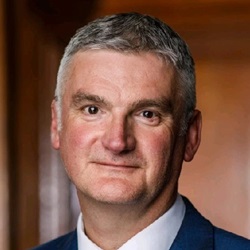
Evans: People cannot bring their best selves to work
The Law Society is putting the focus on disabled solicitors, access to senior roles for all under-represented groups and improving workplace cultures in a three-year diversity strategy.
The society said members had told it that disabled solicitors faced “persistent structural and cultural barriers”, and organisations “struggle to provide” reasonable adjustments and proper support.
Disabled solicitors make up only 6% of those working for law firms in 2023, compared to 23% of working age adults.
The society said it had been working with members for the last 12 months on its equality, diversity and inclusion (EDI) strategy for 2025-8 and conducted a “detailed review” of current research and insights.
The society said this latest strategy concentrated on “fewer priorities to achieve greater impact and outcomes”.
To improve the diversity of senior leadership in the profession, the society said it would be supporting the “progression of solicitors in large firms and in-house legal teams” to increase the numbers of female, disabled, minority ethnic and LGBTQ+ solicitors and improve socio-economic diversity.
The society said that while the profession had become more diverse at entry level, that diversity was not reflected in senior positions.
Women held just 35% of partner equivalent roles last year, despite making up 53% of practising solicitors.
Meanwhile, 19% of solicitors said they were from Black, Asian, or minority ethnic backgrounds, but accounted for 14% of solicitors at partner-equivalent levels last year.
“And in large law firms with 50 plus partners minority ethnic solicitors hold only 9% of partner positions, with Black solicitors holding only 1% of partner roles in the largest law firms.”
The gap is much smaller for other under-represented groups. Of the 4% of solicitors who are lesbian, gay or bisexual, 3% hold partner positions. The 6% who are disabled hold 5% of partner positions, and the 18% from lower socio-economic backgrounds, 17%.
The society’s remaining priority in its EDI strategy is building “more inclusive workplace cultures” in a profession where, according to this year’s LawCare Life in the Law survey, 59% said they had “poor mental wellbeing”.
The society said its members “raised concerns about the lack of inclusive workplace cultures and practices and the high rates of bullying, harassment and discrimination in legal workplaces”, which had a negative impact on under-represented groups.
The strategy committed to supporting firms to “build inclusive environments where solicitors thrive” and “everyone feels respected”.
President Mark Evans said that inequality and bias continued to “shape career paths” for solicitors.
“Women, minority ethnic, LGBTQ+ and disabled solicitors still face barriers to senior roles. Disabled solicitors remain underrepresented. And too often, workplace cultures leave people feeling like they can’t bring their best selves to work.”