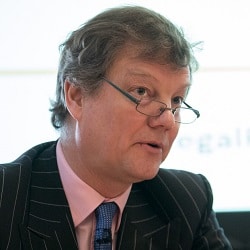
Birss: The costs of costs is too high
The new costs budgeting ‘lite’ pilots may not save solicitors time or money, it has been claimed – but the deputy head of civil justice insisted that ways to reduce costs have to be tried out.
The pilots cover cases within some Business and Property Courts, certain other cases valued at under £1m, and cases involving qualified one-way costs shifting.
At the annual roundtable organised by the Association of Costs Lawyers (ACL), its vice-chair, Victoria Morrison Hughes, said she was concerned about the impact the pilots may have on external costs providers.
First, the ‘lite’ procedure was “not any lighter because the information still needs to be there in order to achieve the figures in the summary sheet”.
Second, solicitors may not want to incur the cost of an external costs lawyer for the process, given that their fee may not be recoverable from an after-the-event insurance policy in the event the case did not progress.
“We are finding that there is a tendency for solicitors to try to do it in-house without the necessary expertise,” she said. The alternative was that they asked the external costs firm to waive their fee, which was commercially difficult.
She added: “I think they also underestimate the impact of getting it wrong. They think that they can still argue good reason [to depart from the budget after the event] and get away with it.”
The pilot name suggested a light-touch approach, “but from our perspective as costs lawyers, it will still need the same amount of detail and input in order to get to the final figure so that, in the event that there is a dispute between the parties or an inquiry from the judge, we can provide the information”.
Costs lawyer Steven Green, a partner and national head of costs at Irwin Mitchell, also doubted how much time a lite budget would save and was concerned the court might not have enough information to make a decision.
The pilots came out of the May 2023 report of the Civil Justice Council’s working group on costs, which was chaired by Lord Justice Birss, the outgoing deputy head of civil justice. He stressed to the roundtable that they were only recommendations and “if it turns out to be a rotten system, we will not do it”.
He added: “If any piece of civil justice was so fragile that one could not even start a test to do it in a slightly different way, we would never get anywhere.”
Sukhjit Dhadwal, a senior costs lawyer at DLA Piper, suggested that judges have recently been chopping more off budgets than they used to and wondered if the pilots would be a continuation of that. “Are we shifting costs from inter partes battles to client shortfalls?” he asked.
Costs lawyer Mersedeh Safa, a legal director at Clyde & Co, where she manages the commercial costs team, said she was “quite positive” about the pilots if they encouraged parties to agree budgets, rather than take up court time.
Steven Green said he had observed a recent trend of more agreements on budgets. The cases in the last year where the costs of the budgeting process were not automatically in the case had also focused minds, as had the drive for ADR.
This raised the question of whether the pilots were needed, Ms Morrison-Hughes said.
But Birss LJ said it remained the case that “the cost of costs is too high and costs budgeting light is an attempt, among other things, to reduce them”.
Speaking afterwards, ACL chair David Bailey-Vella said: “As Costs Lawyers, we have become very used to new ways of doing things and this has allowed us to understand what works and also to predict behavioural responses from solicitors.
“The pilots may be too blunt a tool to achieve what is intended but we understand the desire to try and create a more bespoke approach to budgeting in certain areas.
“Our members are going into these pilots with their eyes wide open and we will be sure to give our feedback on how they work.”