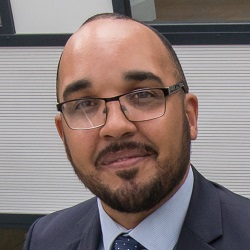
Cunningham: Other regulators should copy the BSB’s approach
A leading ‘gender critical’ barrister has praised the Bar Standards Board (BSB) for the way it handles “meritless” complaints after rejecting two made against her.
Naomi Cunningham, who practises from Outer Temple Chambers and chairs the charity Sex Matters, said the BSB had rejected one complaint about her talk at the London School of Economics on the Supreme Court ruling in the For Women Scotland case.
In its landmark ruling, the court held that the Equality Act 2010 definition of sex refers to biology.
Ms Cunningham recounted that, in her speech, “I had acknowledged that inflated claims had been made about ‘trans rights’, and trans people made those claims were going to have to give way to the rights of others”.
Writing on LinkedIn, she said the BSB had displayed “exemplary practice” in dealing with this: “I’ve just received their decision to take no further action on (yet) a(nother) meritless complaint against me. The exemplary bit is that, once again, this was the first I’d heard of the complaint: it was triaged out first, and I was notified second.
“Other regulators, please copy. If you let activists weaponise complaints procedures against professionals, tying them up in a stressful and time-consuming requirement to respond, you risk liability on your own account for religion or belief discrimination.”
The second complaint, she said, was essentially that she had repeatedly ‘misgendered’ a “trans-identifying man” during a hearing.
The Bar Standards Board was taking no further action having “taken the view that it is not professional misconduct to ‘misgender’ in court, at least in a case where the sex of the person ‘misgendered’ (correctly sexed) is salient”.
Ms Cunningham – who describes her practice as ‘Gender Wars wall to wall’ – added that, although opponents have “occasionally objected vociferously”, no judge has yet made “even the faintest attempt to persuade me not to do so”.
She explained that her practice in a number of hearings over the last year has been to use “correct-sex pronouns for trans-identifying men whose sex is material to the case”.
She went on: “My view is that it will often be important not to use inaccurate language to refer to trans-identifying men in cases touching on issues of sex, gender identity, gender identity theory, and ‘gender-critical’ belief. (It’s mostly men, though the same goes for trans-identifying women if it arises.)
“That is because every time you refer to a man as ‘she’, you reinforce two things: the false idea that some men are women; and the repressive and damaging social norm that characterises using accurate language as rude, unprofessional or even abusive.”
We reported last month that the BSB had rejected a complaint against high-profile KC Jolyon Maugham over his outspoken criticism of the Supreme Court ruling.