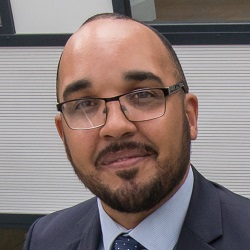
Williams: Government position indefensible
A senior lawyer should be appointed to make sure that first compensation offers to victims of the Post Office Horizon scandal are “full and fair”, the first part of the inquiry report has recommended.
The inquiry, chaired by former High Court judge Sir Wyn Williams, also recommended that all Horizon Shortfall Scheme (HSS) claimants should be entitled to government-funded legal advice on whether to accept a fixed compensation sum of £75,000 or have their entitlement assessed.
The position of the Department of Business and Trade (DBT) was “indefensible”, given that legal fees were covered for the equivalent decision in the three other compensation schemes running for subpostmasters.
The HSS is for current and former postmasters who believe they experienced shortfalls related to previous versions of the Horizon system. It has paid out £600m to date.
Sir Wyn recommended that the government and Post Office agree on a definition of what is meant by “full and fair financial redress” and make a public announcement explaining it.
“Such an explanation should indicate that claimants should be awarded sums which are equivalent to those which they would receive in civil litigation brought before a judge in England and Wales, assuming that the judge hearing the civil claims awarded damages at the top end of the appropriate range of damages.
“The explanation should also include a statement to the effect that, if fairness demands it in a particular case, a decision maker may depart from the established legal principles which would normally govern the assessment of damages in civil litigation.”
Sir Wyn said there were “many hundreds of claims in HSS which are still to be assessed”, where claimants had decided that £75,000 did not constitute full and fair financial redress, and “a significant number of additional claims” may still be made.
Over nearly five years, the HSS “has had no completely independent person or organisation tasked with facilitating or, if necessary, imposing a settlement upon the claimants and/or the Post Office and the [DBT] which can, objectively be regarded as being full and fair.
“In my view, that has been a serious omission in respect of the governance, administration and delivery of HSS.”
To fill the gap, he recommended the appointment of a senior lawyer who could “take appropriate action” to ensure that offers were “full and fair” and that claims were assessed “as soon as is reasonably practical”.
On the HSS, the report said about 12% of people paid for legal advice at some stage during the process of making their initial claims.
Sir Wyn said: “I regard it as unconscionable and wholly unfair that claimants in HSS are unable to obtain legal advice, paid for by the department, about whether they should opt for the fixed sum offer or assessment of their claims.
“Yet the department continues to resist this as if its life depended upon it.”
The only difference with the other schemes was that the number of HSS claimants were “many times more” than their combined number.
“Presumably, the department is worried about the potential cost of funding the legal fees payable in respect of large numbers of HSS claimants. Yet it is prepared to spend up to £30,000 for each claimant to have advice about whether to accept the fixed sum offer in [the Horizon Convictions Redress Scheme]. In my view, the department’s stance on this issue is indefensible.”
Some claimants faced “really difficult decisions” which would be “much easier to make with legal assistance”.
Sir Wyn noted that the DBT’s stance was “not even defended” by the Post Office.
In a statement to Parliament yesterday, DBT minister Gareth Thomas said he was “very sympathetic” to the report’s recommendations.
“Clearly, a number of them require careful consideration. We will respond to them promptly as some concern the ongoing delivery of Horizon redress schemes. Sir Wyn has set us a deadline of 10 October, and we will meet it.”
He did, however, announce that the DBT had accepted some of them, including that close family members of those most adversely affected by Horizon should also receive financial redress.
The report included the legal costs paid by the government and Post Office for delivering the Post Office Horizon redress schemes.
For its work on HSS, Herbert Smith Freehills has been paid £67m by the Post Office up to the beginning of December 2024 and received a further £15m for its work on the overturned conviction scheme.
Meanwhile, the DBT paid Addleshaw Goddard £4.7m and Dentons £1.8m for Group Litigation Scheme legal costs, and Addleshaw Goddard a further £152,300 for the Horizon Conviction Redress Scheme.