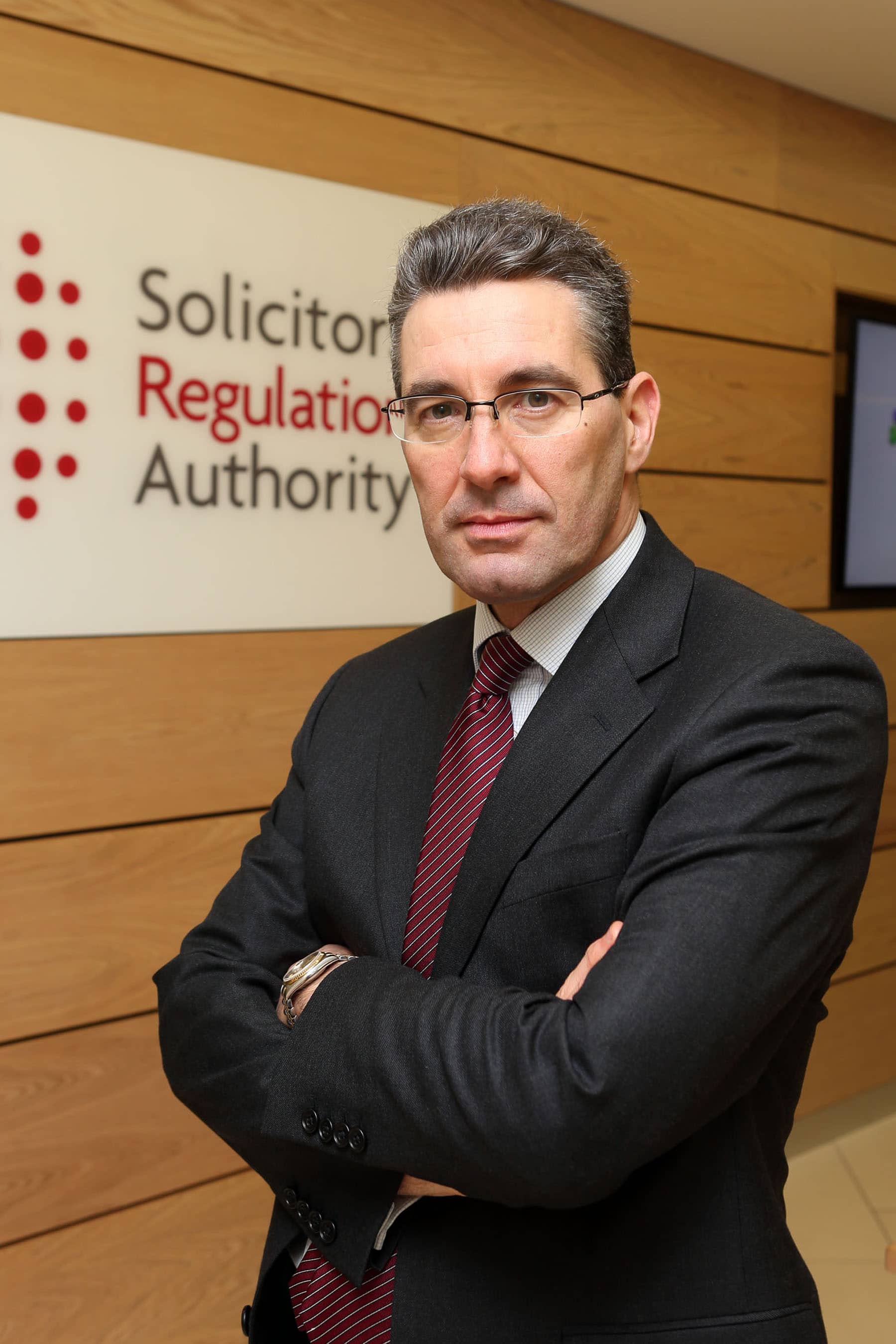
Philip: “vast majority of solicitors are doing a good job”
The time taken between serious misconduct being reported to the Solicitors Regulation Authority (SRA) and a referral to the Solicitors Disciplinary Tribunal (SDT) is 550 days, the regulator has revealed.
The SRA has also made public for the first time a further figure, showing that 83% of its misconduct investigations are concluded within a year.
Paul Philip, chief executive of the SRA, told Legal Futures that publication of the figures would lead to “more scrutiny by the profession and the public”.
Mr Philip said the regulator needed to “press hard” to reduce the figure of 550 days, or over 18 months, for referrals to the SDT and to increase the figure of 83% for cases closed.
He said he was confident that both figures would improve, but did not want to set targets, at least not until four to six months from now.
“I strongly believe that the vast majority of solicitors are doing a good job under sometimes difficult circumstances,” he said.
“However, it is the hallmark of any profession that it deals quickly and firmly with individuals who commit serious breaches of its rules.
“Being subject to our procedures is obviously stressful and I am keen to minimise this stress. Those who find themselves subject to our procedures have a right to have concerns lacking merit dealt with promptly. However, those who seriously flaunt our rules can expect nothing less than a robust response.”
Release of the figures follows a decision taken by the SRA’s board last month, which will ensure that updates are published every time the board meets.
A spokesman for the SRA added: “While the majority of issues brought to us are dealt with quickly, some issues are very complex and require more detailed investigation. In these instances, it can take a while to obtain the information we need, and this constrains our ability to deal with investigations as quickly as we would want to.
“In some serious cases, we often take other regulatory action as part of the investigation, such as intervening into a firm or controlling solicitors’ work by putting conditions on their practising certificates.
“For serious and complex cases we may require information from a variety of external sources, including other agencies. For example, there may be a criminal investigation taking place and we need to work closely with the police.”