Newey J: “clear and cogent evidence of dishonesty”
The High Court has rejected a challenge to the closure of an alternative business structure by the Solicitors Regulation Authority (SRA). It was the first time an ABS closure decision has been tested in the High Court.
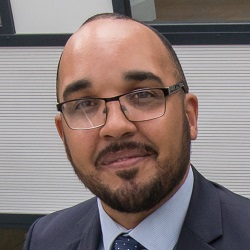
Mr Justice Newey agreed with counsel for the SRA, acting on behalf of the Law Society, that there was reason to think that solicitor Michael Elsdon had “lost his ethical compass”.
Newey J went on: “It seems to me that the risks attached to withdrawing the intervention outweigh those of continuing it.
“As I have said, the available evidence appears to me to provide clear and cogent evidence of dishonesty as well as indicating breaches of the code and Accounts Rules.
“On the basis of the (admittedly less than comprehensive) material before me, I consider that Mr Elsdon and Sai-Donne cannot safely be trusted with the administration of estates or other work.”
The court heard in The Law Society v Elsdon and others [2015] EWHC 1326 (Ch) that Mr Elsdon practiced under his own name until 2013, when he bought Woolacott & Co and set up an ABS, Sai-Donne Limited, with his non-lawyer wife as a co-director.
The head office was Mr Elsdon’s home in Barnstaple, Devon, but there were also branch offices in Lancing, West Sussex and North Walsham, Norfolk.
In December 2014 the SRA intervened into the practice on the grounds, among other things, of “reason to suspect dishonesty on the part of Mr Elsdon”. Earlier that year the regulator had secured a High Court order to obtain crucial evidence.
Mr Justice Newey said Sheikh v Law Society [2006] EWCA Civ 1577 had made it clear that overcharging in probate matters could potentially justify intervention on the grounds of suspected dishonesty.
Among the examples of overcharging by Mr Elsdon examined by the High Court was the estate of Kathleen Lilley. Newey J said the estate realised around £159,000, but Mr Elsdon submitted three bills totalling over £50,000.
Newey J said that for the first bill, Mr Elsdon charged himself out at £250 per hour, in the second and third bills, £275 per hour. A fourth bill was later submitted for £3,300.
Solicitors acting for Mr Elsdon’s fellow executor challenged the bills under the Solicitors Act, and the amount was reduced by Master Gordon-Saker on assessment from over £53,000 to just under £8,000. The Master criticised the solicitor for his “excessive” charge-out rate.
Newey J said: “The bills that Mr Elsdon has rendered give rise to a number of concerns. As a starting point, the enormous extent to which Master Gordon-Saker reduced the bills that he assessed indicates overcharging on a very substantial scale.”
Having considered five further examples of overcharging, including instances of “inappropriate steps” being taken to deter challenges on fees, and evidence of a lack of co-operation with the SRA and the Legal Ombudsman, Newey J said there was “good reason to think” that there had been breaches of both the Code of Conduct as well as SRA outcomes.
Mr Justice Newey concluded that the risks attached to withdrawing the intervention outweighed those of continuing it. He declined to direct withdrawal of the intervention notices.