


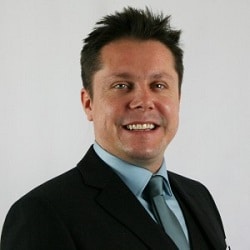
Hathaway: perfecting the infrastructure
Edward Hands & Lewis (EHL), a Leicester-based law firm with 15 branches, is planning to launch a national network of franchised offices next year.
Senior partner Jason Hathaway told Legal Futures: “I’m a passionate believer in the high street solicitor, and I would love to see our brand in every high street. This is the best way to do it.”
The firm is part of the multi-disciplinary EHL Group, which also has tax, marketing, HR, commercial debt recovery, and professional trustees brands.
Mr Hathaway, who is managing director of the group, said a pilot franchising scheme at Syston in Leicestershire had proved a “phenomenal success” since its launch in February this year.
He said the solicitor running the office, Rebecca Gunn, had doubled monthly turnover to around £30,000 by bringing in her own contacts and using new marketing techniques, particularly social media.
“Where a person is motivated to make a success of something, the difference is amazing,” Mr Hathaway said.
“If someone is directly employed, they don’t go in at seven in the morning, or stay to seven at night. If they own the business, they do. Rebecca has her own company.
“We provide the regulatory framework, deal with the insurance and accreditations, and control the client account. We have a right of audit if standards are not what they should be.”
Mr Hathaway said that in return for the services it provided, EHL took 15% of the Syston office’s gross fee income.
He said the franchising model would only be rolled out when EHL’s infrastructure was “perfect”, particularly the IT, and the franchising manual was finished.
Mr Hathaway said the firm’s Leicester HQ had recently doubled in size, enabling HR and IT to be centralised.
“We won’t expand until the manual is absolutely right and the little things, like payment processes and IT, are in place. I’ve done franchising as a lawyer and we’re not going to rush into massive expansion.
“We will really start pushing this in mid-2018, but when it happens, we won’t be doing it in a half-hearted way.
“A lot of solicitors are frustrated by the increasing regulation that stops them from being lawyers, and I think that a lot of small firms and sole practitioners will join.
“The market for solicitors is controlled so much by third parties – estate agents, accountants and banks. We don’t control the relationship the way we used to. We want a much more direct connection with clients.
“If you differentiate yourself only on price, there will always be a race to the bottom. That can’t be the only model that works.”
Mr Hathaway said he was approached by QualitySolicitors a few years ago, but decided not to join.
“QS is a marketing badge. They don’t directly control the quality. The beauty of franchising is that you can expand the brand and control the quality.
“If I’m not happy with the quality, I have all kinds of ways of pulling the plug. Quality takes priority over everything else in the franchising agreement.”
Mr Hathaway said he was inspired not by other law firms, although he did some research on virtual firms, but by the models used in financial services, particularly by independent financial advisers, such as the national partnership operated by St James’s Place.
He said other influences were accountancy network TaxAssist and opticians Specsavers.
“We have to be relevant to how the market is evolving. I don’t want to have to try and convince people that the world is changing, because it is changing.
“I’m a business person first and foremost and I have to make sure my business model is robust enough for what is coming.”











