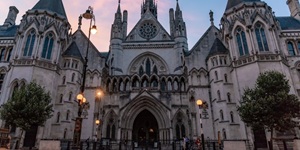
Hockman: unacceptable risk of diluting the basic structure of the profession
The Bar Standards Board (BSB) narrowly defeated a motion proposed by a former Bar chairman that its plans for entity regulation are unhelpful to the justice system, in a debate held in London last week.
Supporting the motion in the debate, hosted jointly by City University and the Bar’s south eastern circuit, were Stephen Hockman QC, who chaired the Bar in 2006, and His Honour Judge Owen Davies, QC. They argued the BSB proposal was “unlikely to benefit the administration of justice in the 21st century”.
But the BSB team of Patricia Robertson QC, chair of the entity regulation project board, and BSB director Vanessa Davies managed to persuade the audience that BSB-regulated entities – structures which can employ lawyers and non-lawyers so long as there is at least one higher court advocate owner/manager – were necessary to counter alternative business structures regulated by the Solicitors Regulation Authority (SRA).
Arguing for the motion, Mr Hockman – who first challenged the BSB’s entities scheme in October – identified the government’s deferred contracting scheme for publicly-funded work as the main threat to the Bar’s survival. But entity regulation would begin a process that could ultimately lead to solicitors dominating the Bar Council and the Inns of Court and “present an unacceptable risk of diluting the basic structure of the profession”, he insisted.
The Bar’s strength, said Mr Hockman, who is head of 6 Pump Court Chambers, comes from the fact that barristers “act at one time another or another for both sides… that is a fantastically important and civilising feature of our system”.
There was an “an inherent lack of logic in saying that you are going to preserve the Bar by authorising… entities in which there may only be a single barrister and 99 lawyers of other kinds”, he continued. Practising within entities would inevitably undermine the cab-rank rule and “lead to conflicts of interest being far more frequent”.
Ms Robertson argued that the main threats to the Bar come from “ordinary people [being] priced out of justice much of the time; government cuts to public funding of legal services; the elevation of “consumerism to some kind of mantra”, in conflict with a barrister’s duty to the court; the possible future creation of a “one-size-fits-all” legal services regulator; and the daily problems of barristers “struggling to make a living from their professional skills”.
Giving barristers the option of joining entities was an attempt “to address those threats in a constructive way by removing all kinds of restrictions in the ways in which barristers can conduct their businesses”, she said, adding that they already have an option to join entities regulated by the SRA – a “multi-purpose regulator that is regulating all forms of legal services under the sun”.
Better, she argued, that “those barristers who feel in order to survive in today’s market they need to form an entity” should be able to choose “a specialist regulator focused on advocacy, focused on how you safeguard the administration of justice”.
Rejecting the charge that entities could spell the end of the Bar, Ms Robertson suggested that by enabling entities and “expanding the tent” of BSB regulation to solicitor-advocates, the board would prevent “an exodus from the self-employed bar into SRA-regulated entities”.
If it did not and the market did “vote with its feet”, the number of barristers might “dwindle to the point where we can no longer afford independent specialist regulation”.
There were other possible advantages of entities, she went on. Barrister-led entities could provide a way into the profession for those who could not afford the financial risk of building a self-employed practice. Equally, entities might be “of real value in terms of diversity”, since black and ethnic minority and women barristers did not fare well within the self-employed profession. “Entities may be part of the potential solution,” she said.