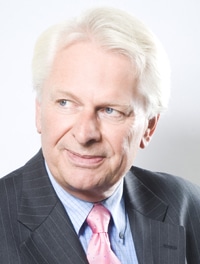
Pitt: undertaking discharged
The Bar Standards Board (BSB) has been discharged from an undertaking it gave nearly two years ago to deal with concerns over the way it dealt with changes to the cab-rank rule.
But in doing so, the Legal Services Board said it had continuing misgivings that have “directed our attention towards the BSB’s approach to regulation more broadly”.
The problem stemmed back to an LSB investigation in 2013 over inappropriate Bar Council influence on changes made by the BSB to the cab-rank rule, which were to facilitate the new contractual terms between barristers and solicitors.
This was only resolved in November 2013 when the Bar Council gave four undertakings to address the LSB’s concerns.
One of them was that by 31 July 2014, the BSB would review whether it was appropriate for standard terms and the related cab-rank rule – that the rule does not apply other than where a barrister is instructed under the terms, or under their own terms – to remain as regulatory arrangements.
It missed this deadline but eventually carried out the review, deciding to retain the existing cab-rank rule, together with the standard contractual terms, but replace its ‘list of defaulting solicitors’ with a new rule allowing barristers to refuse work under the cab-rank rule where there is an “unacceptable risk” that they will not get paid. The LSB approved this last month.
In a letter this week to his BSB counterpart, Sir Andrew Burns, LSB chairman Sir Michael Pitt said at a meeting earlier this month, “my board acknowledged the work completed by the BSB in the course of its review and reminded itself that the review was not about the existence of the cab-rank rule in itself, but about whether the standard contractual terms and the list of defaulting solicitors should remain part of the BSB’s regulatory arrangements”.
He wrote: “Although it registered some concerns in the BSB’s approach, my board concluded that the terms of the fourth undertaking could be considered to be discharged and no further, formal enforcement action with respect to the 2013 investigation would be appropriate.”
However, looking beyond the specifics of the undertaking, the LSB “identified some issues of concern”, he went on. These included that in its review the BSB, having concluded on the necessity of a single set of terms in regulatory arrangements, did not consider any sources other than the Bar Council’s standard contractual terms.
The LSB was also worried that the “BSB could arrive at different conclusions on the two issues under review with regard to the impact on the regulatory objective of promoting and protecting the public interest in relation to the use of a product of the representative body in the independent regulator’s arrangements. These different conclusions appeared to us to be somewhat in tension”.
As a result, Sir Michael concluded, “these issues have directed our attention towards the BSB’s approach to regulation more broadly and where the BSB is in its journey towards becoming a modern independent regulator with the requisite capacity and capability.
“Such broader issues are being considered as part of our current regulatory standards review of the BSB.”