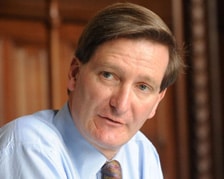
Grieve: costs are carefully controlled
The Attorney General has rejected a call to cap the pay of lawyers instructed by the state at legal aid rates, arguing that the work of government is “vastly more varied and complex than that for individuals and corporate”.
With the campaign against the government’s proposed legal aid cuts in full flow, Labour MP Hugh Bayley challenged the government to estimate what it would save if it placed a ceiling on the amount the state itself spends on legal services, “so that it does not pay fees above legal aid rates to a government-instructed lawyer or expert and does not pay for more hours of legal services than would be allowed in a court’s detailed assessment of costs for legal aid clients”.
He also asked for an estimate of the potential cost savings of prohibiting the pursuit of litigation which does not have a reasonable prospect of success.
Attorney General Dominic Grieve, answering in place of Lord Chancellor Chris Grayling, said it would not be possible to provide such estimates without examining the cost of every legal service provided to government.
He continued: “Nor is it the case that the litigation and advice for which legal aid is made available is analogous to the work of government, which is vastly more varied and complex than that for individuals and corporates. No realistic comparison can be made. Much of the legal advice which government obtains in the course of its business is given in order to ensure that government is acting lawfully and within its powers.”
Mr Grieve insisted that the costs of government litigation and advice are “carefully controlled”, such as through the use the Attorney General’s counsel panel. “The hourly rates paid to panel counsel are fixed and have not been raised for over 10 years,” he noted. “Hours claimed are also carefully monitored. Queen’s counsel may not be used without my approval, nor can any hourly rate outside a fixed range be agreed without my approval.
“I am satisfied that the current process balances the need for governments to have access to the best quality legal support at a cost that provides real value for money.”
Meanwhile, the president of the Supreme Court, Lord Neuberger, has issued the government with warnings over the risks to the legal profession in its legal aid reforms, as well as looking at the future of litigation where lessons are learned from eBay and small cases are decided without a hearing. See our sister site Litigation Futures for the full story here.